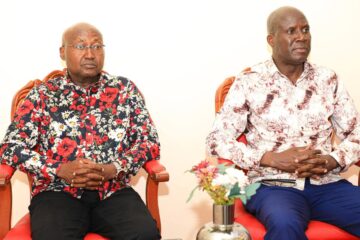
Kenya’s strength is diversity not division.
By Musa Bashir.
Kenya is often celebrated as a nation whose strength lies in its diversity. From the coast to the highlands, from the bustling cities to the arid north, the country’s many communities contribute to a shared national identity. Yet for many Kenyan Somalis, the promise of equal citizenship has often been overshadowed by suspicion, profiling and persistent questions about their belonging.
For decades, Kenyan Somalis have argued that they have been required to prove their patriotism and citizenship in ways that many other Kenyans rarely experience. Despite being citizens by birth and making significant contributions to the country’s economy, public service and social development, they continue to face narratives that portray them as outsiders. These narratives, often amplified during periods of political competition, undermine national unity and reinforce harmful stereotypes.
The roots of this challenge run deep. Following independence, the Shifta conflict of the 1960s shaped state attitudes toward northeastern Kenya for generations. Security policies introduced during and after that period often treated local populations with suspicion rather than as equal citizens. Many residents of the region believe these policies created a perception that their loyalty to Kenya was conditional, a burden that has persisted long after the conflict ended.
This historical marginalization has also been reflected in development outcomes. Counties such as Wajir, Mandera and Garissa have long lagged behind many other parts of Kenya in infrastructure, healthcare, education and public investment. Residents have repeatedly pointed to inadequate road networks, limited public services and insufficient government investment as evidence of decades of neglect.
At the same time, debates surrounding population figures in northeastern Kenya have occasionally fueled perceptions that the voices of local communities are viewed with skepticism. Since population statistics influence resource allocation, political representation and development planning, challenges to those figures can deepen feelings of exclusion among communities that already feel marginalized.
Perhaps no issue illustrates the struggle for recognition more clearly than the historical vetting requirements imposed on many Kenyan Somalis seeking national identification documents. For years, citizens in this region were subjected to additional procedures that many other Kenyans did not face. The consequences extended beyond paperwork. Delays in obtaining identification documents affected access to education, employment opportunities, financial services, voting rights and freedom of movement.
The recent removal of these extra vetting requirements by President William Ruto was welcomed by many as an important step toward equal citizenship. Supporters argued that no Kenyan should be subjected to exceptional procedures based solely on ethnicity or region of origin. While concerns about national security remain legitimate, security measures must always be balanced with constitutional rights and the dignity of citizens.
Security concerns have frequently shaped public discussions about Kenyan Somalis, particularly in the aftermath of terrorist attacks linked to extremist groups such as Al-Shabaab. Protecting citizens from violence is an essential responsibility of the state. However, legitimate security concerns should never be used to justify collective suspicion of an entire community.
Unfortunately, political rhetoric has at times blurred the distinction between criminal networks and ordinary citizens. Some politicians have portrayed Kenyan Somalis through the lens of insecurity, implying that ethnic identity or geographical proximity to Somalia should automatically raise questions about loyalty. Such narratives are not only unfair but also dangerous. They reduce millions of citizens to stereotypes and ignore the diversity, complexity and patriotism that exist within the community.
The existence of a long and porous border with Somalia does not make Kenyan Somalis any less Kenyan. Citizenship is not determined by ethnicity, language, religion or geography. They have served their country in government, the military, healthcare, education, business and countless other sectors. They have participated in elections, paid taxes, built businesses and contributed to national development like any other citizens.
Their economic contributions are particularly significant. Across Kenya, Somali-owned businesses have become an integral part of the national economy. Through entrepreneurship, family support networks and community-driven investment, Kenyan Somalis have created jobs, facilitated trade and strengthened local economies. Yet instead of celebrating these achievements, some political voices have questioned the legitimacy of their success, relying on assumptions rooted in prejudice rather than evidence. Success should be admired, not treated as suspicious because of the identity of those who achieve it.
The vibrant Madaraka Day celebrations recently held in Wajir County offered a powerful reminder of the community’s place within the nation. The enthusiastic participation of residents, colorful cultural displays and visible expressions of national pride demonstrated what Kenyan Somalis have long maintained. They are proud citizens who value their Kenyan identity and wish to contribute fully to the country’s future.
Kenya’s leaders have a responsibility to promote unity rather than exploit differences for short-term political gain. Statements that cast entire communities as suspect may generate headlines and political support, but they weaken national cohesion and erode trust in public institutions. Effective security policies should be intelligence-driven, evidence-based and respectful of constitutional rights. They should target criminal behavior, not ethnic identity.
Equally important is the role of the media and the public. Responsible reporting and informed public discourse can help challenge stereotypes rather than reinforce them. Every Kenyan has a stake in ensuring that diversity remains a source of strength rather than division.
The question facing Kenya today is not whether Kenyan Somalis belong. They do. They are citizens, contributors, taxpayers, voters, professionals, entrepreneurs and public servants. The real question is whether Kenya is prepared to fully embrace all its citizens equally and reject narratives that force some communities to repeatedly justify their place in the nation.
A stronger, more united Kenya will not be built through suspicion or collective blame. It will be built through equal citizenship, inclusive development, respect for constitutional rights and a shared commitment to ensuring that no Kenyan is made to feel like a stranger in their own country.
The writer is Editor and Co-Founder of Asal Media and Media Consultant.